Cottage gardens are my favorite style of garden design, probably because it bring images of Beatrix Potter and Peter Rabbit to mind. I love the relax look, the flower choices and the, oh so British look. And with spring around the corner, now seems like a great time to share some tips on how to achieve that look.
*** Original article written by me for the Winona County Master Gardeners column in the St. Charles Press/Lewiston Journal in summer 2020.
Cottage gardens are one of the most popular garden styles in the world. Not only do they evoke images of summer, but they are also fairly easy to care for because of their smaller scale. Part of this garden design appeal is its seemingly relaxed look. But make no mistake, there is a method to achieving that quality. Thankfully, with a little planning you can have a beautiful cottage garden that is not only inviting but also an area where pollinators can thrive. These tips will help guide you in designing a pollinator-friendly cottage garden:
Start small. Just like with any other garden, a cottage garden requires upkeep. I recommend starting with 1 or 2 beds and getting comfortable with their required workload and maintenance before going bigger.
Choose the right plants for your garden. Plant selection will depend on location, space, and budget. But also keep in mind the color palette you want, height and width at full maturity, and whether the plants are pollinator-friendly.
Select plants with different blooming times to provide continuous growth and interest during the growing season. This will also ensure pollinators have food and shelter throughout the season. Consider adding sunflowers, as they will provide both necessities well into late fall.
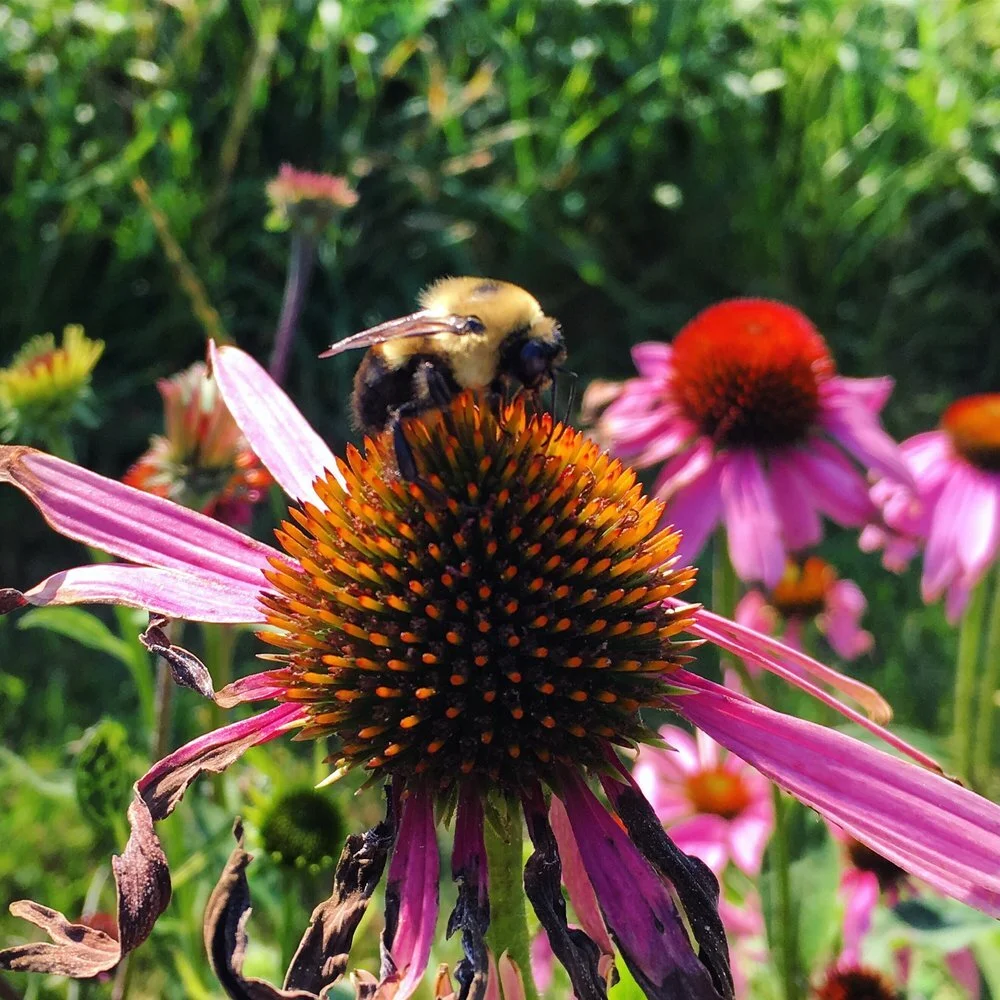
Add dimension and texture by incorporating different plant shapes and heights to give interest at various eye levels. For example, you can add height by combining tall flowering spikes like ‘Russian’ sage and Speedwell, with loose-shaped plants like coneflowers and scabiosa, and finish with a compact border plant like hybrid salvia or boxwood. Also for height consider sunflowers and milkweed.
Stay away from hard straight-edged borders and incorporate curves and winding forms that evoke a sense of fluidity.
Plant spacing is not as restrictive in this type of garden. It is common to see more plants packed in smaller spaces, with no exposed ground, to create a sense of lushness and fullness. This also helps cut down on weeding.
Add impact with anchor plants and structures. Roses are a favorite anchor plant in cottage gardens because they provide impact and focus. Some cottage gardens use structures like trellises, obelisks, picket fencing, repurposed items, and plants like evergreens to anchor the garden and give a sense of structure.
Create focus areas by grouping plants of the same variety in groups of three or more. Again, keep in mind the plants height and width at full maturity.
Do not forget container gardening. Containers are a great way to add interest.
Keep in mind that a cottage garden will not happen overnight even if you spend hundreds of dollars in plants. The magic of the cottage garden happens as time goes by and plants get established.
A cottage garden is a deeply personal space. Keep this in mind when designing and selecting plants. Make it inviting to others but make it a space that will also brings you joy in years to come. Happy gardening!

You may find me joining some of these fun link-ups: In a Vase on Monday, Mosaic Monday, Pink Saturday, Nature Notes, Dishing It & Digging It, Grace at Home, Encouraging Hearts & Home, Wonderful Wednesday Blog-Hop, Farmhouse Friday, Wonderful Wednesday, Fridays at the Firehouse.